


The Importance of Sleep: Is Your Dog Getting Enough Rest?
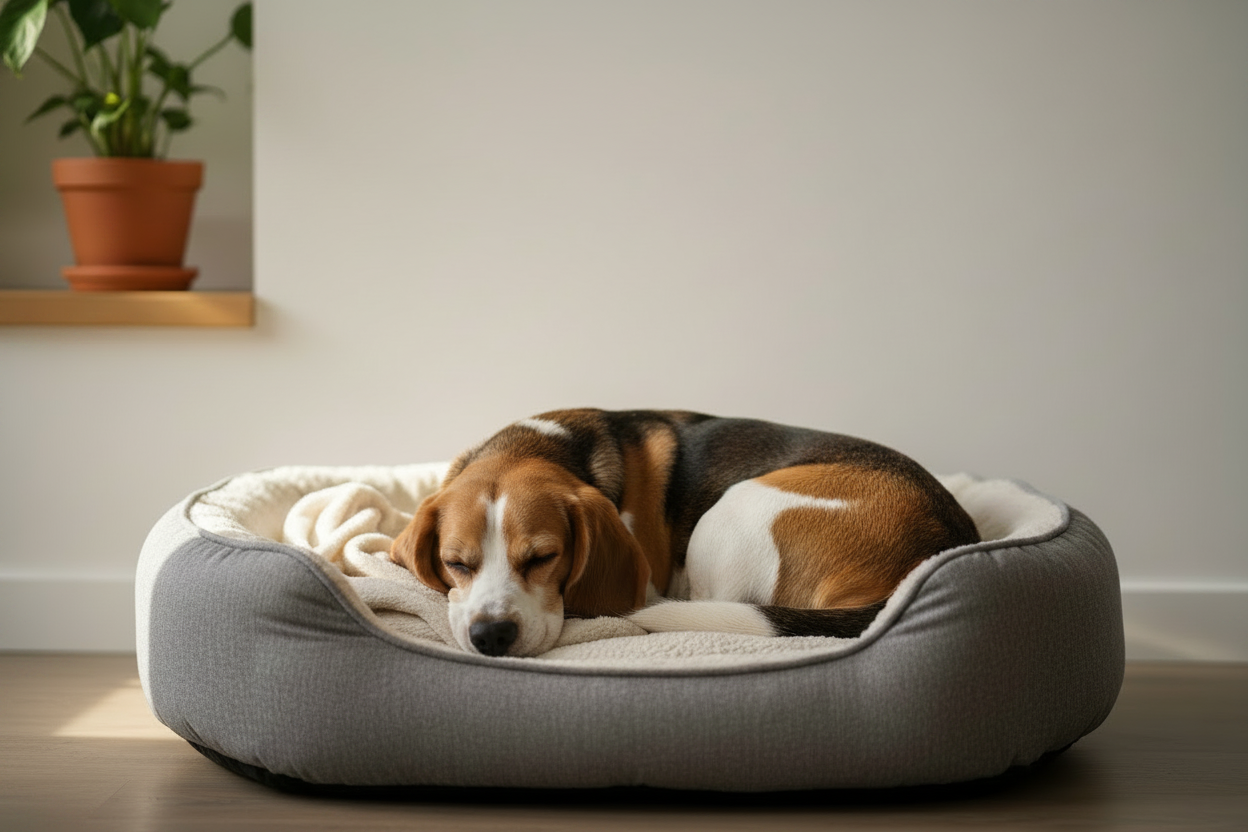
When we think about keeping our dogs healthy and happy, we tend to focus on the obvious things: good nutrition, exercise, training and enrichment.
Sleep rarely makes the list.
Yet growing evidence suggests that quality rest may be just as important to a dog's wellbeing as physical activity. In fact, studies suggest that many dogs spend between 12 and 18 hours each day sleeping or resting, with puppies, senior dogs and highly active working breeds often needing even more.
At first glance, it might seem like a lot of time spent doing very little. But sleep isn't simply "switching off". It's a vital period of recovery during which the body and brain process the events of the day.
More Than Just Rest
During sleep, dogs consolidate memories, process learning experiences and recover from physical and emotional stress. The body's stress hormones gradually return to normal levels, muscles recover from activity and the nervous system gets a chance to reset.
It's perhaps no surprise, then, that dogs who regularly miss out on quality sleep can struggle in ways that aren't immediately obvious. An overtired dog isn't always a sleepy dog.
Sometimes they're the dog that struggles to settle after a walk. The dog that barks more than usual. The dog that seems unable to focus during training or becomes frustrated more quickly than expected.
When a dog struggles to settle, becomes increasingly reactive or seems unable to switch off, our instinct is often to look for more activity. Sometimes, however, the missing piece is simply better quality rest.

Sleep and Learning Go Hand in Hand
Anyone who has lived with a puppy will recognise the pattern. A burst of activity followed by an apparently urgent need for sleep.
Puppies instinctively alternate between periods of exploration and periods of rest because their growing brains and bodies need time to process what they've learned.
Adult dogs are no different. Whether you're teaching a new recall, working on lead manners or practising scent work, learning doesn't stop when the training session ends. Much of that information is processed and stored later while the dog rests.
If a dog is struggling to concentrate, appears distracted or seems unable to retain information they previously knew, it's worth considering whether they're getting enough uninterrupted downtime.
The Busy Dog Who Never Switches Off
Some dogs are naturally better at resting than others.
Working breeds such as Spaniels, Collies and other highly driven dogs are often bred to remain alert to their surroundings. Their enthusiasm and eagerness to engage are part of what makes them such wonderful companions and working partners.
However, those same traits can sometimes make relaxation difficult.
We tend to spend a great deal of time building our dogs' skills, fitness and confidence, yet far less time teaching them that it's perfectly acceptable to do nothing at all. Some dogs become so accustomed to activity that they begin to anticipate the next exciting event before they've fully recovered from the last one.
Learning how to relax can be just as important as learning how to work.
The Role of Melatonin
Sleep is influenced by a naturally occurring hormone called melatonin, which is produced by the pineal gland in response to darkness.
Melatonin helps regulate the body's internal clock and signals that it's time to rest. As daylight fades, melatonin production increases, helping prepare the body for sleep. This natural rhythm supports healthy sleep-wake cycles and contributes to overall wellbeing.
Whilst melatonin is often associated with sleep, its role extends beyond simply making us feel tired. It also plays a part in supporting normal immune function and maintaining healthy cellular function.
This is one of the reasons maintaining healthy sleep patterns throughout life is so important.

Senior Dogs and Sleep
Senior dogs can be particularly affected by changes in sleep patterns. As dogs age, sleep may become lighter and more fragmented, and some may struggle to settle during the evening or wake more frequently overnight.
You may notice an older dog napping more during the day, yet appearing restless at night. Others may seem unable to fully switch off, pacing occasionally or changing sleeping positions more frequently than they once did.
Whilst some change is a natural part of ageing, quality rest remains just as important for older dogs as it is for growing puppies and busy young adults. Understanding how sleep patterns evolve throughout a dog's life can help us support them more effectively and recognise when a little extra patience, reassurance or veterinary advice may be needed.
Creating a Space to Rest
Just as we all have different preferences for where and how we sleep, dogs benefit from having a place where they can relax without interruption.
For some dogs, that's a bed in a quiet corner of the kitchen. For others, it might be a crate left open as a safe retreat or a favourite spot beside the sofa.
The important thing is choice. Dogs should have somewhere comfortable to rest where they don't feel the need to remain on constant alert and where they can step away from household activity if they wish.

Sometimes the Best Thing We Can Do Is Nothing
As owners, we often feel responsible for keeping our dogs occupied every moment of the day. We plan walks, training sessions, enrichment activities and games.
All of those things are valuable. But sometimes the most beneficial thing we can offer our dogs is the opportunity to simply switch off.
My own dogs spend much of the day close by while I work. They check in from time to time, as I check on them, but for the most part they are content to sleep, relax and watch the world go by until it's time for food, exercise, training or play.
Perhaps they understand something we occasionally forget.
Rest isn't wasted time. It's an essential part of living well. 🐾


-
Posted in
Competition dogs, Dog Agility, Dog Agility Fitness, Dog body language, Dog Fireworks, Dog safety, Dog Supplements UK, elderly/senior, Green Lipped Mussel Dogs, Green Lipped Mussel for Dogs, Gun dogs, My dog won't settle, Scared Dog, Senior Dog Health, Separation Anxiety, The Strongest Green Lipped Mussel Supplement, Working dog energy