


A Look At Sundowners Syndrome
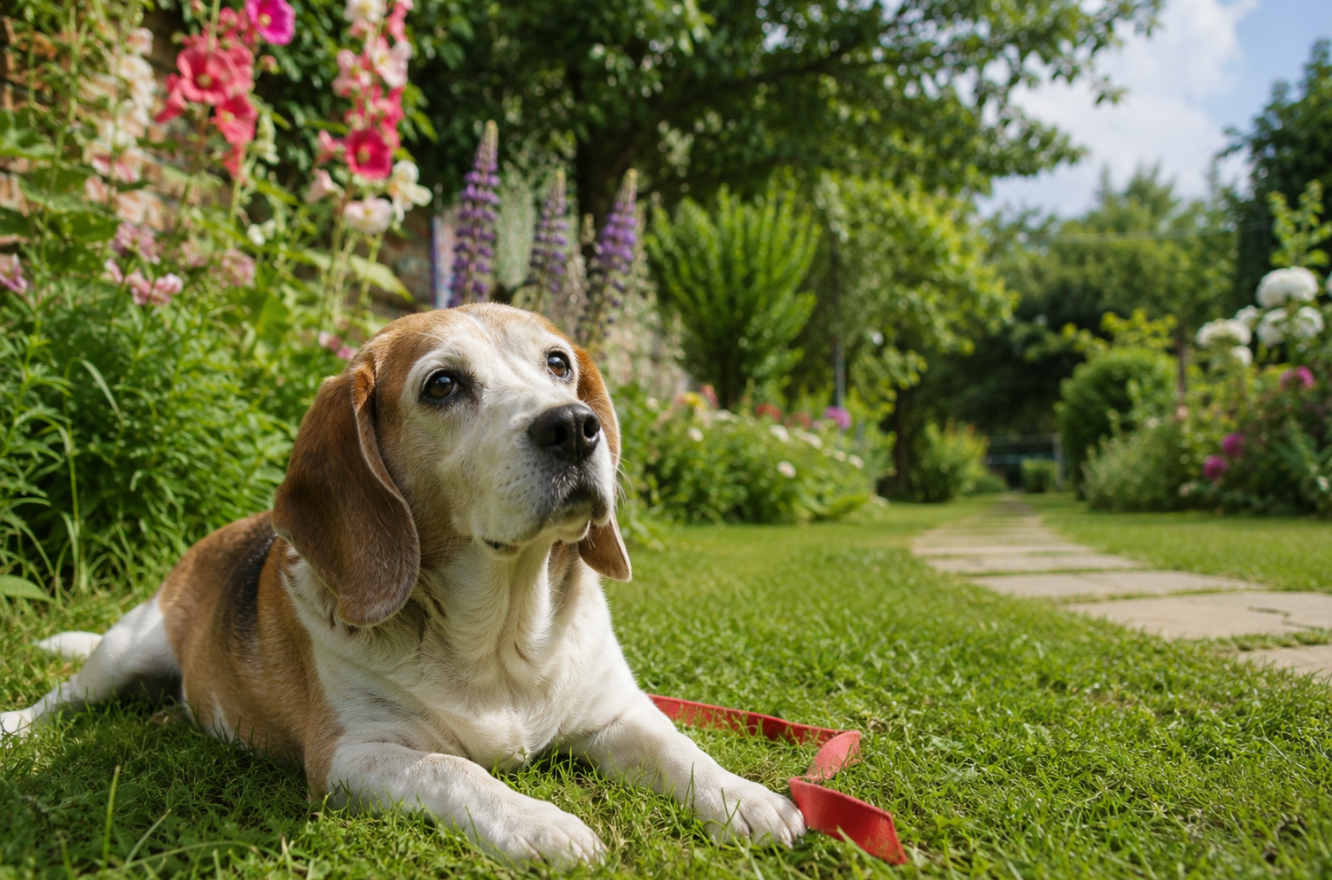
There's a particular kind of sadness that comes with watching an old dog become uncertain in places they've known their whole life.
For many owners, it begins quietly. A dog who suddenly can't settle in the evenings, pacing from room to room or standing in corners. Wanting to go outside, then immediately wanting to come back in. Perhaps barking for no obvious reason. Or staring at a familiar doorway as though they've forgotten what it's for.
Yet by morning, they often seem more themselves again.
This pattern is commonly referred to as Sundowners Syndrome — a form of age-related cognitive decline linked to Canine Cognitive Dysfunction (CCD), sometimes described as "doggy dementia." It tends to become most noticeable from late afternoon into the evening, when older dogs can appear more confused, restless, anxious or disoriented.
This isn't a new phase of stubbornness, attention-seeking, or "bad behaviour." And it certainly isn't owners imagining things.
For many older dogs, the world simply becomes a little harder to interpret with age.

The Changes Can Be Subtle at First
Owners often describe a feeling that "something just isn't quite right anymore."
A dog who has known "sit" for twelve years suddenly hesitates before responding.
A once-independent dog becomes unusually clingy in the evenings.
A dog who slept peacefully for years now wanders the house at 2am.
One owner described their dog as seeming to "forget what he was supposed to be doing." Another said their dog looked as though she was "trying to find something but didn't know what." Those descriptions come up repeatedly with cognitive decline in senior dogs.
Common signs can include:
- Restlessness or pacing in the evening
- Difficulty settling to sleep
- Standing and staring into space
- Seeming confused in familiar rooms
- Forgetting previously learned commands
- Barking or vocalising at unusual times
- Wanting constant reassurance
- House-training accidents
- Changes in sleep-wake cycles
- Increased anxiety or fidgeting
- Wandering aimlessly or getting "stuck" in corners
Not every senior dog will exhibit the same, and not every older dog with evening restlessness has cognitive decline. Pain, hearing loss, reduced eyesight and other age-related health changes can also contribute, which is why veterinary assessment is always important.
If you've got a dog showing these signs simply recognising that these behaviours have a name can be enormously reassuring.

Why Does It Happen More in the Evening?
We still don't fully understand why sundowning appears later in the day, but researchers believe several factors may play a role:
- Fatigue after navigating the day
- Changes to normal sleep-wake cycles
- Reduced vision in lower light
- Increased anxiety as surroundings become harder to interpret
- Age-related changes within the brain itself
For dogs already struggling to process information clearly, the transition from daylight into evening may simply be overwhelming.
It Can Be Difficult for Owners Too
One of the hardest parts of canine cognitive decline is that it changes the rhythm of daily life for everyone in the household.
If any of this sounds familiar perhaps you find yourself sleeping lightly, woken by tapping nails as your dog wanders the house when they would usually be resting. Some describe feeling helpless because the dog appears unsettled, but they can't work out what's wrong.
And there can be guilt too. Frustration over accidents in the house, exhaustion from broken sleep and worry that you're somehow failing them. But this stage of life isn't about perfect management, that will look different for everyone, dog and owner. It's about gentle support, patience and adaptation.
Older dogs do not need us to "fix" ageing. They need us to help them feel safe within it.

Keeping Older Minds Engaged
As dogs age, physical exercise often naturally reduces — but mental stimulation still matters enormously. Gentle opportunities to sniff, search, explore and engage can help older dogs remain more settled and confident.
The key is adjusting expectations. This isn't the time for intense training sessions or overstimulation; gentle brain games are usually far more beneficial.
Simple enrichment ideas can include:
- "Find it" scent games around the house or garden
- Snuffle mats
- Lick mats
- Slow feeder puzzles
- Short, calm training refreshers using familiar cues
- Gentle sniff walks with plenty of time to explore
Routine can also become very important. Predictable mealtimes, walks and evening habits can help reduce anxiety and make the world feel easier to navigate.
Nutritional and Gentle Support Options
While there is no "cure" for cognitive ageing, supportive care can make a meaningful difference to quality of life.
Omega-3 fatty acids are widely discussed for their role in supporting brain health and cognitive function in dogs of all ages. Some owners choose to incorporate targeted nutritional support such as Trimega into their dog's routine as part of an overall wellbeing approach.
For dogs who seem particularly unsettled or anxious during the evening hours, gentle calming support products such as Settlers may also help encourage relaxation and reassurance.
These approaches are never about changing who the dog is. They're about helping them feel a little more comfortable in a world that may no longer feel quite as clear as it once did.

Growing Older Together
There is something deeply moving about caring for an elderly dog.
The pace changes. Walks become slower. Sleep becomes lighter. Routines become gentler. And sometimes, evenings become harder.
But even when memory fades slightly or familiar routines become muddled, what often remains remarkably strong is the emotional attachment dogs have with their people. The reassurance of a familiar voice, the comfort of a hand resting quietly nearby and the safety of the home you share.
Even when routines change, the bond between dog and owner often remains as strong as ever.
-
Posted in
Dog Agility, Dog Anxiety, dog arthritis, Dog body language, Dog cataracts, Dog Eye Health, Dog eyesight, Dog health, Dog joint supplement comparisons, Dogs Early Signs Kidney Disease, Dogs Renal Health, Green Lipped Mussel for Dogs, Pet Supplements UK, The best dog joint supplement, The No1 dog joint care supplement, The Strongest Green Lipped Mussel Supplement