

Seasonal Allergies in Dogs: Why Planning Early Matters
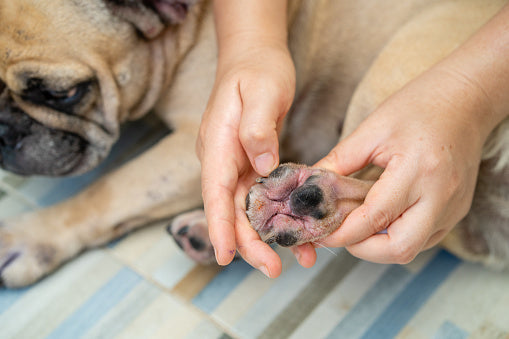
February moving to March still feels like winter. But immunologically, things are already beginning to shift.
Across the UK, late February and March often bring the first wave of tree pollens, followed by grasses and environmental allergens as temperatures rise. In recent years, with less predictable seasonal patterns, allergy triggers are appearing earlier and lasting longer.
For many dogs, this is when the groundwork for seasonal flare-ups is laid — even if the scratching doesn’t become obvious until weeks later.
If your dog struggles every spring or summer, the time to think about allergies isn’t when the itching is in full swing. It’s now.

What Actually Causes the Itching?
Seasonal allergic skin disease in dogs — often referred to as canine atopic dermatitis — is an immune-mediated condition.
When a susceptible dog encounters allergens such as pollen, dust mites or mould spores, the immune system activates mast cells within the skin. These cells release histamine and other inflammatory mediators including cytokines.
This leads to:
- Pruritus (persistent itching)
- Erythema (redness)
- Skin barrier disruption
- Inflammation and swelling
It isn’t simply surface irritation — it’s a biochemical cascade.
Once this inflammatory process begins, scratching and licking further damage the skin barrier, allowing more allergens to penetrate. The result is the familiar itch–scratch cycle:
And when your dog is unsettled and uncomfortable, you are too. Broken sleep, constant licking, pacing — seasonal allergies affect the whole household.
Over time, scratching can even become habitual, meaning the behaviour continues even when the original trigger fluctuates.

The Veterinary Approach — And Its Limitations
Veterinary medicine offers several effective prescription treatments for allergic dogs, including:
- Apoquel
- Cytopoint
- Corticosteroids
- Antihistamines (in selected cases)
These medications can be highly effective at suppressing pruritus (itching) and reducing inflammation, often providing rapid relief and significantly improving quality of life.
However, many allergic dogs require repeated or long-term treatment, particularly when symptoms persist across extended or unpredictable seasons.
As with any ongoing medication, there are potential considerations. While most dogs tolerate these therapies well under veterinary supervision, long-term use may be associated with side effects depending on the drug used. These can include:
- Gastrointestinal upset (vomiting, diarrhoea)
- Increased susceptibility to infections
- Alterations in immune function
- Changes in liver enzyme levels
- Increased thirst and urination (particularly with corticosteroids)
- Weight gain or behavioural changes (most commonly linked to steroid use)
Your vet will always weigh the benefits against these risks and monitor accordingly, but for some owners — particularly where treatment becomes year-round — cost and long-term medication burden can become factors in decision-making.
As UK seasons become less defined and pollen patterns more unpredictable, it can be difficult to estimate when itching will start or stop. Many dogs now show symptoms across multiple seasons, or intermittently throughout the year.
This is where proactive, nutritional strategies may play a supporting role — not as a replacement for veterinary care, but as part of a broader plan aimed at strengthening skin resilience and supporting balanced immune responses before flare-ups escalate.

Supporting the Skin Barrier All Year Round
Healthy skin is an active immune organ. A robust skin barrier makes it harder for allergens to penetrate and trigger mast cell activation.
Dermal O3 - contains three key ingredients selected for their role in skin integrity and inflammatory modulation:
- Biotin – supports keratin infrastructure and overall skin resilience
- Nicotinamide (Vitamin B3) for its role in skin barrier repair and modulation of inflammatory pathways
- Omega-3 fatty acids - widely documented for their anti-inflammatory properties and support of epidermal health
Rather than acting as a prescription suppressant, this type of formulation aims to strengthen the structural and inflammatory resilience of the skin itself.
For some owners managing ongoing veterinary costs — particularly with medications such as Apoquel — nutritional skin support may offer a cost-effective non-prescription component within a broader management plan.
The intention is not to replace veterinary advice, but to build stronger foundations so reactions may be less intense.

The Immune System and the Bigger Picture
Allergic disease is fundamentally about immune reactivity. Some dogs simply respond with greater intensity to environmental triggers.
Emerging research in both human and veterinary medicine highlights the importance of immune modulation rather than immune suppression. Supporting balanced immune function may help reduce exaggerated inflammatory responses.
Formulations such as Epimmune from Ace Canine Healthcare are designed to support normal immune function and resilience, without overstimulation. Used alongside skin-focused support, this may contribute to a more measured response to environmental allergens.
Again, the goal is balance — not switching the immune system off but encouraging it to react proportionately.
The Gut–Skin–Immune Connection
There is increasing evidence that the gut microbiome plays a central role in immune regulation.
Dogs with imbalanced gut flora (dysbiosis) may show exaggerated inflammatory responses. A balanced digestive environment helps “educate” the immune system, improving tolerance and reducing hypersensitivity.
This is why long-term allergy management often includes attention to digestive health, alongside skin and immune support.
When the gut, immune system and skin barrier are working in harmony, the inflammatory response may be less forceful.
Why Year-Round Strategy Makes Sense
With seasons becoming less predictable, waiting for symptoms to appear can mean you are already behind the inflammatory curve.
By targeting support all year round, you are:
- Helping maintain skin barrier integrity
- Supporting balanced immune responsiveness
- Potentially reducing the intensity of seasonal flare-ups
- Breaking the itch–scratch cycle before it escalates
Much like starting antihistamines before peak hay fever season in humans, early support may help reduce the overall severity of symptoms.

Looking Ahead
If your dog has a history of seasonal pruritus, now is a sensible time to think ahead. Speak to your vet about your long-term strategy. Consider how skin health, immune balance and gut support might form part of that wider plan.
Allergy management is rarely about one single solution. It is about layering sensible strategies — veterinary care, environmental management, nutritional support — to reduce escalation before it begins
A little early preparation may mean a far more comfortable summer — for both of you.
If you need any support with itchy skin please email us at support@ace-canine.com or call us on 0118 9842871


-
Posted in
Alternative to Cytopoint, Alternative to Apoquel, Canine Digestion, dog bad breath, Dog body language, Dog claws falling off, Dog dental care alternatives, Dog diarrhoea, Dog dull coat, Dog grass allergies, Dog gut problems, Dog hair loss, Dog health, Dog Immune diseases, dog itchy skin, Dog joint supplement comparisons, Dog seasonal allergies, Dog stinky breath, Dog supplements to target allergies, Dog wind, Dogs allergies to dust mites, Dogs claws cracking, Head shaking, Onychotin, SLO in Dogs, Sore Paws, The best dog joint supplement, The No1 dog joint care supplement